23rd Feb
The first pic here was taken looking North down Leith Walk. I live about 50 yards away and I suppose I should celebrate the Walk being returned to use, possibly the first time since 2008 and the phase 2 completion of the abysmal Tram project. People familiar with my feelings about the trams will know I am not a fan. I don't object to them as a form of transport, I just feel Edinburgh (council and TIE) handled the initial business of them (original proposition of £375million climbed to twice that at £776million plus huge delays) so badly that we should never have considered phase 2 while there remained any tram debt from phase one. And then never employed any of the people in charge ever again, and sent them to open prison or to dig fields. And NOBODY should have been allowed to mention trams and the Newhaven extension until the sun ran out of fuel and began to dim. Just my opinion. I mean if someone commits a crime (and that amount of negligance is a crime) do we rebuke them or do we say "it was just bad luck (that you caused the worst financial omnishambles in the history of the council) I'm sure you'll do better next time, have another go, dig up Leith Walk AGAIN."
By the way they operated at a loss of £9.4 million in 2018 then the next year, 2019, they voted to do phase 2 to Newhaven. Someone should take their crack pipes off them.
The trams were always just a vanity project. Because the buses are great. They cover all the tram routes (can be diverted) and were quicker until the trams started to hog the roads, and I'm sure are just as green. There is the notion that electric trams are greener but that depends where you get your electricity from. Renewables provide about 30% of UK electricity, which is good. But Coal and Nuclear provide 13% and 11% which is not so good. Gas is about 41% and not a renewable. For the record I don't have a driving licence and cycle everywhere, and get the bus which I really enjoy now I am 60 and travel free. I could travel free on the trams also and will probably end up getting one to the airport at some point, now they come past my home, but for the moment my intentions are never to set foot on one.
Fifteen years?! It only took about six to build the Channel Tunnel which I would remind you is 31miles long and goes under the sea. Six years is the same time it took to build the 8.7miles of the original tram fiasco from York Place to the Airport. None of which goes under the sea. For the remainder of the fifteen years 5 guys (sometimes only 3) have been leaning on shovels in Leith Walk while the pavements have been fenced off leaving room for 2 pedestrians abreast, with a scooter and deliveroo cyclist fighting to get through.
This bad joke continues. The fences have been removed and the route is now all but up and running. Knowing Leithers would be lost without something to complain about they have sealed off all the left turns heading South-bound. Most of the roads up the Walk, like Iona Street, have been pavemented off at the Leith Walk end and you'd have to bump up a kerb to access them. Others, like London Road and then up at Waterloo Place have NO LEFT TURN signs. Initially car drivers assumed this was just a mistake because why on earth would you have no left turn at London Road? (Especially with the 5 preceding streets going up the Walk blocked?) They had to put large barriers in the road and when they were ignored the Police had to stand there arresting folk as drivers practised civil disobedience. It's not just an early April Fool, there really is no left turn at London Road. (And no rational explanation.)
Mary and I were driving back along Pilrig St towards Iona St a week or 2 back and about 100 yards from home. Onto the Walk and we had to turn right (Southbound) as Northbound tramworks were still being completed. Albert Street was blocked with roadworks. Next junction Brunswick Rd: one way (against us). Next, Brunswick St barriered off. Elm Row busy with roadworks so no left at Montgomery St. Then London Road. (See above.) We might have been able to squeeze down Calton Rd but it is often log-jammed with traffic coming out onto Leith St. No left at Waterloo Place. Not sure if that was temporary or permanent too as we were laughing so much we didn't notice. Which meant going up the Bridges to turn left down the High Street, then Abbeyhill and back down Easter Road. Over a mile to travel 100 yards.

Now since I don't believe the Council employs only moonfaced dipsticks, this has to be part of a larger ploy to discourage motorists away from the city centre by making it an infuriating bag of shit. Without ever actually saying, "the abortion that is the traffic management system in Leith Walk and appears to be the work of an imbecile, threading cycle lanes in and out the bus queues, was designed to be uninstinctive and positively dangerous in order to discourage motorists". Once you understand it is not because there are a shower of idiot cunts in charge of planning, but a sustained drive to make the whole place pedestrian-only, you realise Edinburgh is cutting-edge green and eco friendly. I'm fairly sure that's what they're up to but I've never actually seen it presented on paper as such. But it is the only logical explanation.
It is also very challenging to understand the traffic lights at the junctions, which seem to come on randomly and independently of the pedestrian crossings (often different for either side of the road - Albert St). And the cycle lanes carve circular arcs across rectangular junctions - Brunswick Rd. It is quite the work of modern art.
The first pic here was taken looking North down Leith Walk. I live about 50 yards away and I suppose I should celebrate the Walk being returned to use, possibly the first time since 2008 and the phase 2 completion of the abysmal Tram project. People familiar with my feelings about the trams will know I am not a fan. I don't object to them as a form of transport, I just feel Edinburgh (council and TIE) handled the initial business of them (original proposition of £375million climbed to twice that at £776million plus huge delays) so badly that we should never have considered phase 2 while there remained any tram debt from phase one. And then never employed any of the people in charge ever again, and sent them to open prison or to dig fields. And NOBODY should have been allowed to mention trams and the Newhaven extension until the sun ran out of fuel and began to dim. Just my opinion. I mean if someone commits a crime (and that amount of negligance is a crime) do we rebuke them or do we say "it was just bad luck (that you caused the worst financial omnishambles in the history of the council) I'm sure you'll do better next time, have another go, dig up Leith Walk AGAIN."
By the way they operated at a loss of £9.4 million in 2018 then the next year, 2019, they voted to do phase 2 to Newhaven. Someone should take their crack pipes off them.
The trams were always just a vanity project. Because the buses are great. They cover all the tram routes (can be diverted) and were quicker until the trams started to hog the roads, and I'm sure are just as green. There is the notion that electric trams are greener but that depends where you get your electricity from. Renewables provide about 30% of UK electricity, which is good. But Coal and Nuclear provide 13% and 11% which is not so good. Gas is about 41% and not a renewable. For the record I don't have a driving licence and cycle everywhere, and get the bus which I really enjoy now I am 60 and travel free. I could travel free on the trams also and will probably end up getting one to the airport at some point, now they come past my home, but for the moment my intentions are never to set foot on one.
Fifteen years?! It only took about six to build the Channel Tunnel which I would remind you is 31miles long and goes under the sea. Six years is the same time it took to build the 8.7miles of the original tram fiasco from York Place to the Airport. None of which goes under the sea. For the remainder of the fifteen years 5 guys (sometimes only 3) have been leaning on shovels in Leith Walk while the pavements have been fenced off leaving room for 2 pedestrians abreast, with a scooter and deliveroo cyclist fighting to get through.
This bad joke continues. The fences have been removed and the route is now all but up and running. Knowing Leithers would be lost without something to complain about they have sealed off all the left turns heading South-bound. Most of the roads up the Walk, like Iona Street, have been pavemented off at the Leith Walk end and you'd have to bump up a kerb to access them. Others, like London Road and then up at Waterloo Place have NO LEFT TURN signs. Initially car drivers assumed this was just a mistake because why on earth would you have no left turn at London Road? (Especially with the 5 preceding streets going up the Walk blocked?) They had to put large barriers in the road and when they were ignored the Police had to stand there arresting folk as drivers practised civil disobedience. It's not just an early April Fool, there really is no left turn at London Road. (And no rational explanation.)
Mary and I were driving back along Pilrig St towards Iona St a week or 2 back and about 100 yards from home. Onto the Walk and we had to turn right (Southbound) as Northbound tramworks were still being completed. Albert Street was blocked with roadworks. Next junction Brunswick Rd: one way (against us). Next, Brunswick St barriered off. Elm Row busy with roadworks so no left at Montgomery St. Then London Road. (See above.) We might have been able to squeeze down Calton Rd but it is often log-jammed with traffic coming out onto Leith St. No left at Waterloo Place. Not sure if that was temporary or permanent too as we were laughing so much we didn't notice. Which meant going up the Bridges to turn left down the High Street, then Abbeyhill and back down Easter Road. Over a mile to travel 100 yards.

The view South - up Leith Walk,
ends appropriately with the St James Quarter turd emoji
ends appropriately with the St James Quarter turd emoji
Now since I don't believe the Council employs only moonfaced dipsticks, this has to be part of a larger ploy to discourage motorists away from the city centre by making it an infuriating bag of shit. Without ever actually saying, "the abortion that is the traffic management system in Leith Walk and appears to be the work of an imbecile, threading cycle lanes in and out the bus queues, was designed to be uninstinctive and positively dangerous in order to discourage motorists". Once you understand it is not because there are a shower of idiot cunts in charge of planning, but a sustained drive to make the whole place pedestrian-only, you realise Edinburgh is cutting-edge green and eco friendly. I'm fairly sure that's what they're up to but I've never actually seen it presented on paper as such. But it is the only logical explanation.
It is also very challenging to understand the traffic lights at the junctions, which seem to come on randomly and independently of the pedestrian crossings (often different for either side of the road - Albert St). And the cycle lanes carve circular arcs across rectangular junctions - Brunswick Rd. It is quite the work of modern art.

I like this view and the shapes of the buildings
Onwards and upwards. The morning was fine, really fine. The forecast was for sun all day and there was a spring in my step on account of it. It makes a huge difference to the photos if there is decent lighting, and a huge difference to my spirits if it is warm and sunny. I wonder if I shouldn't live in a warmer country with more wildlife all year round. I get so tired and bored of a grey damp cold Scottish Winter with no butterflies. However my feathered friends at Warriston keep me smiling and give me a reason to get out the door. Unfortunately the sun didn't last as long as the forecast had predicted.

well that string of sweeties didn't turn out well


1/1250th of a second nearly fast enough.
My camera goes up to 1/4000th but the light rarely allows it.
My camera goes up to 1/4000th but the light rarely allows it.


wren - loads about, peeping like wee maniacs!


signs of Spring

long tailed tit

s/hawk
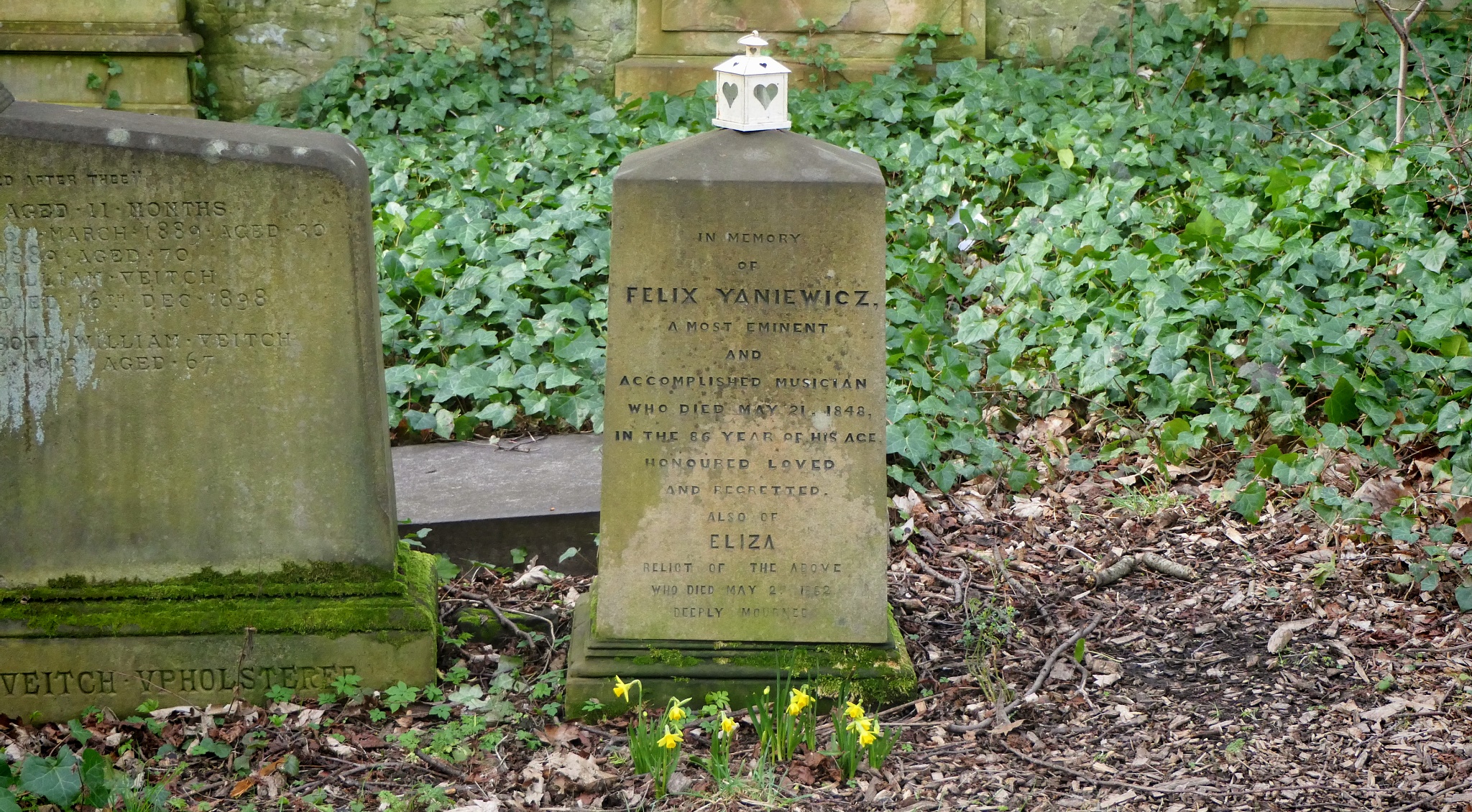
I was messing about North of the tunnel when I saw the sparrowhawk. I followed it but it was not wanting to be photographed and after some dirty looks (and no decent shots through the branches) it flew West over to tall trees on the Western boundary of the cemetery, just down from the information board. I wandered over there but was unable to see where it went. I did however find this gravestone - the marker for Felix Yaniewicz. Just the night before at Mike's Plaque Attack, I had learned this Polish immigrant had started the Edinburgh Festival over 200 years ago and lived in Great King Street. The lantern was beside the stone and may have blown off in the recent high winds - I put it back on top. I was very pleased to have come across this stone (for the first time) the day after hearing about Felix. It was a massive coincidence and I felt the sparrowhawk had somehow led me there. What are the chances? There are possibly thousands of graves in Warriston and I rarely read them. (Wikipedia says Warriston has "many tens of thousands of graves.")


not sunny


riverside robins were keen today


busy bathers by the tunnel


goldcrest! (UK's smallest bird)


treecreeper


dunnock

song thrush


the grey wagtail with nearly fully grown back tail


secret garden robin


a few miles and hours of tranquility in the city